Car Stuck in Snow or a Ditch? Winching & Recovery Guide for Gatineau Drivers
Sliding into a snowbank or ending up in a roadside ditch is one of the most stressful winter driving experiences. Icy roads, poor visibility, and heavy snowfalls around Gatineau and Ottawa make these incidents common every winter, even for careful drivers.
When your vehicle is stuck, spinning the tires or trying to “power out” can quickly make the situation worse. This guide explains what to do immediately, how to stay safe, when winching is the right solution, and how a professional recovery service can get you back on the road quickly and safely.
Common Ways Cars Get Stuck in Winter
Understanding how vehicles end up stuck helps you avoid repeating the same situation and recognize when you need professional help instead of trying to force your way out.
Sliding Off Icy Roads into a Ditch
Black ice, packed snow, and sudden braking can easily cause a vehicle to slide off the roadway. Even at low speeds, losing traction near curves, intersections, or highway exits can send your car into a snowy ditch or embankment.
Once off the pavement, the combination of deep snow, soft shoulders, and steep angles makes it very difficult to drive back onto the road without proper equipment.
High-Centered on Snow Ridges
After plows clear roads and parking lots, they often leave snow ridges or windrows. If you drive over one that is too high, your vehicle can become “high-centered,” with the wheels losing contact or weight on the ground while the chassis rests on compacted snow.
In this situation, even good winter tires will spin with little effect because they cannot generate enough downward pressure to grip the surface properly.
Stuck in Deep Snow in Driveways or Parking Lots
Heavy overnight snowfalls can leave vehicles surrounded by drifts. Trying to power forward and backward without a plan often digs deep ruts that trap the tires, leaving your car sitting in a deep trench of snow and ice.
Repeated attempts can overheat the transmission, wear out tires, and even damage drivetrain components if the wheels are spinning on ice or packed snow for too long.
First Steps When Your Car Is Stuck
Before doing anything else, focus on safety—for yourself, your passengers, and other drivers on the road. A stuck vehicle can quickly turn into a more serious situation if not handled correctly.
1. Stay Calm and Check for Injuries
If you slid off the road, check yourself and passengers for any signs of injury. Even a slow-speed slide can cause sudden jerks or impact with hidden obstacles under the snow. If anyone is hurt or you suspect damage to the vehicle’s structure, call emergency services before anything else.
If everyone is safe, turn on your hazard lights so that approaching drivers can see that you are stationary and may need assistance.
2. Evaluate Your Surroundings
Look around to determine how far you are from the roadway, how steep the ditch or bank is, and whether your vehicle is stable. If you are close to traffic or on a narrow shoulder, stay out of active lanes and stand at a safe distance from the vehicle.
If the car is at an angle, avoid standing downhill or directly behind it. Snow and ice can shift unexpectedly, and a vehicle may slide further.
3. Avoid Spinning the Tires Excessively
It’s natural to try to accelerate out of the situation, but aggressive throttle usually makes things worse. Spinning the tires polishes packed snow and ice into a slick surface, digging deeper ruts and reducing traction even further.
Prolonged spinning can also overheat your transmission and stress drivetrain components. If gentle rocking fails within a few attempts, it’s time to consider alternative methods or call for professional winching.
When Winching Is the Right Solution
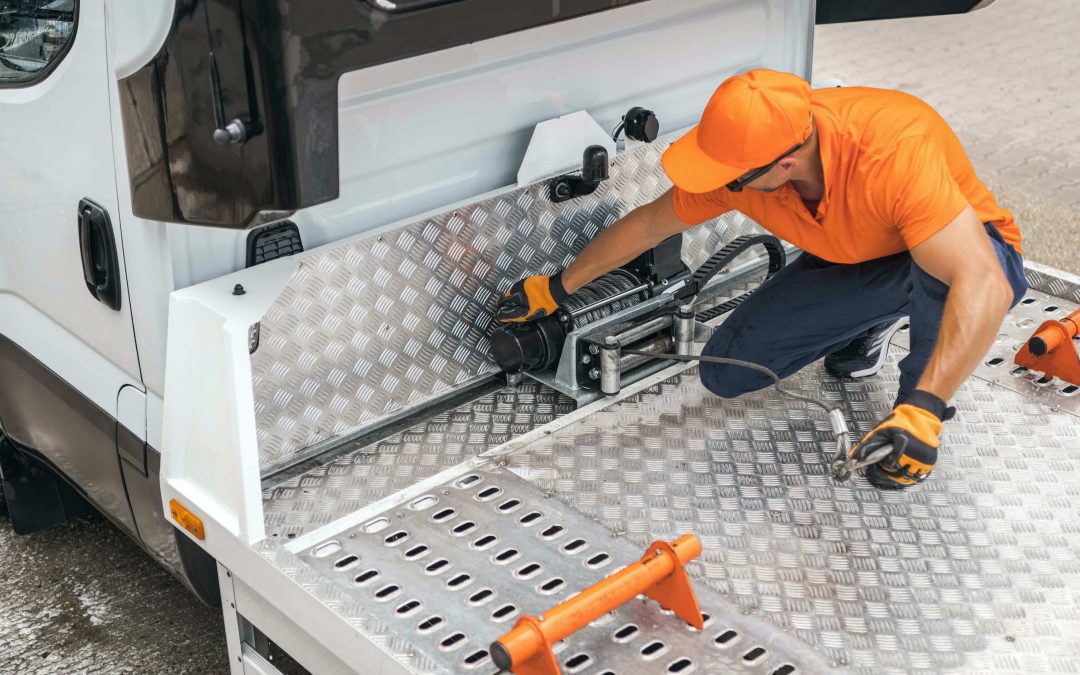
Winching is a controlled method of pulling a vehicle using a cable and a powerful hydraulic or electric winch mounted to a tow truck or recovery vehicle. It’s the safest way to retrieve cars from ditches, snowbanks, and other difficult positions without causing additional damage.
Situations Where Winching Is Recommended
- Your vehicle is off the roadway in a ditch or on an embankment
- The vehicle is high-centered on snow or stuck on a ridge
- There is a steep slope or deep snow between you and the roadway
- Your vehicle is near obstacles such as guardrails, trees, or rocks
- You have already tried gentle rocking without success
- The vehicle’s undercarriage is resting on snow or ice
In these situations, forcefully accelerating or having another vehicle try to yank you out with a strap can bend suspension components, damage bumpers, or cause the strap to snap dangerously. A proper winching setup allows for slow, controlled movement with the pull aligned correctly to protect your vehicle.
Why Professional Winching Is Safer Than DIY Pulling
Many drivers have access to tow straps, chains, or small winches. However, using them without training introduces several risks. Incorrect attachment points, improper angles, and sudden jerks can bend frames, tear off tow hooks, or break mounting points.
Professional operators know where to attach recovery straps, how to calculate pulling angles, and how to use snatch blocks and rigging safely. They also understand how to protect the vehicle’s underbody and avoid contact with obstacles hidden under the snow.
How Professional Winching and Recovery Works
Knowing what to expect when you call a winching service can help you feel more confident and prepared while you wait for help.
Step 1: Assessment and Safety Setup
When the recovery vehicle arrives, the operator first evaluates the position of your car, road conditions, and potential hazards. This includes checking for fuel leaks, proximity to traffic, and stability of the ground under both vehicles.
They then position the tow truck or recovery vehicle to achieve the safest pulling angle while minimizing risk to people, vehicles, and property. Cones or additional warning lights may be used in areas with limited visibility or higher traffic.
Step 2: Choosing Proper Attachment Points
Modern vehicles often have designated recovery hooks or tie-down points specifically designed to handle pulling forces. The operator identifies these points and connects the winch cable or recovery straps where they will not damage the bumper, suspension, or drivetrain.
If factory points are not accessible due to snow or mud, the operator may use additional rigging techniques to distribute forces and protect the vehicle structure. This is one of the main reasons professional training is so important in winching.
Step 3: Controlled Winching
Once everything is connected, the operator slowly applies tension to the cable and begins pulling the vehicle. Unlike sudden jerks with a strap, winching allows for precise, centimeter-by-centimeter movement. The operator can pause frequently to verify that the vehicle is moving safely and not contacting hidden obstacles.
During winching, you will typically stay inside the vehicle with the steering wheel turned as directed to help guide the front wheels. In some situations, the operator may ask you to put the vehicle in neutral or park depending on the angle and safety considerations.
Step 4: Inspection After Recovery
Once your vehicle is back on stable ground, the operator will confirm that it rolls freely and appears structurally sound. If there are signs of damage, fluid leaks, or steering issues, they may recommend towing to a garage rather than driving away.
If everything looks normal, you can proceed carefully, especially if road conditions remain slippery. It’s a good idea to drive slowly at first and pay attention to any unusual noises, vibrations, or warning lights.
When You Also Need Towing, Not Just Winching
In some cases, winching alone is not enough. If the vehicle has sustained damage or is not safe to drive after recovery, towing to a mechanic becomes the next step.
Signs Your Vehicle Should Be Towed
- Visible damage to wheels, suspension, or undercarriage
- Steering feels loose, misaligned, or unresponsive
- Fluids leaking under the vehicle after recovery
- Warning lights appear on the dashboard (ABS, airbag, engine, etc.)
- Tires are badly damaged or rims are bent
- The vehicle was involved in a collision before sliding off
In these situations, forcing the vehicle to drive can turn minor damage into a much more serious repair. A combined winching and towing service lets you safely recover the vehicle and transport it to your preferred garage in one visit.
Staying Safe While Waiting for Winching Service
Winter weather, low visibility, and passing traffic make roadside situations especially dangerous. While you wait for help, take steps to protect yourself and your passengers.
Move to a Safe Location
If your vehicle is stuck close to the roadway, especially on a highway, it may be safer to exit the vehicle and stand well away from the traffic side, preferably behind a guardrail or on higher ground. However, if conditions are extremely cold or visibility is low, staying inside the vehicle with seatbelts fastened might be safer.
Use your judgment based on how close you are to traffic and how likely it is that other drivers may lose control in the same area.
Make Yourself Visible
Keep your hazard lights on and, if you have them, place reflective triangles or flares a safe distance behind your vehicle to alert approaching drivers. Avoid standing directly behind the car where another sliding vehicle could hit you.
If you are in a rural or poorly lit area at night, use your phone’s flashlight or a dedicated emergency light to help the recovery driver locate you more easily.
Conserve Warmth in Extreme Cold
If you must stay in the vehicle, run the engine periodically to maintain warmth, but check that the exhaust pipe is not blocked by snow. A blocked exhaust can cause dangerous carbon monoxide to build up inside the cabin.
Crack a window slightly for ventilation and use blankets, extra clothing, and any available materials to retain body heat. If you have multiple passengers, sitting close together helps conserve warmth.
How to Describe Your Situation When You Call
Giving clear information when you call for winching or roadside assistance helps the dispatcher send the right equipment and prepare the operator before they arrive.
Information to Provide
- Your exact location (road name, direction, nearest intersection or exit)
- Whether you are in a ditch, snowbank, driveway, or parking lot
- How deep the snow appears around the vehicle
- Whether the vehicle is on a slope or at an angle
- Whether you suspect any vehicle damage
- If you have vulnerable passengers (children, elderly, pets)
The more detail you provide, the better the team can plan the safest and fastest way to reach and recover your vehicle.
Other Winter Services That Often Go Together with Winching
A stuck vehicle often has more than one problem. Choosing a company that offers complete roadside assistance ensures you won’t need to call multiple providers for different issues.
- Roadside assistance: General help for breakdowns, minor mechanical issues, and on-the-spot checks
- Tire change service: If sliding into a ditch damaged your tire or rim
- Battery boost: If repeated attempts to get out drained your battery
- 24-hour towing: If the vehicle is no longer safe to drive after recovery
Working with one provider simplifies communication and speeds up the process, especially in bad weather when you just want to get home safely.
Frequently Asked Questions
How long does it take for winching service to arrive in winter?
Arrival times depend on road conditions, traffic, and your exact location. In the Gatineau–Ottawa region, response times are often around 30–45 minutes, but heavy snowstorms or rush hour traffic can extend this. When you call (613) 518-3967, you’ll receive an estimated arrival time before a truck is dispatched.
Will winching damage my vehicle?
When performed correctly by trained professionals using proper attachment points and controlled pulling techniques, winching should not damage your vehicle. The goal is to move your car gently and steadily, avoiding sudden jerks or incorrect angles that could cause harm.
Can you recover all-wheel-drive and low-clearance vehicles?
Yes. Many recoveries involve SUVs, crossovers, and low-clearance cars that slide into ditches or get stuck in snow. Operators adapt their approach to your vehicle’s drivetrain and clearance, and may combine winching with flatbed towing if necessary to protect the vehicle.
What should I do if my car is leaking fluid after being pulled out?
If you see oil, coolant, transmission fluid, or fuel under your vehicle after recovery, do not drive it. Inform the operator immediately so they can arrange towing to a mechanic instead of letting you continue driving, which could worsen the damage or create safety risks.
Is winching service available 24/7?
Yes. Winching and recovery services operate 24 hours a day, 7 days a week throughout Gatineau, Ottawa, and surrounding areas. Winter incidents often happen at night or early morning, so around-the-clock coverage is essential.
Can I request both winching and towing in one call?
Absolutely. When you call, mention that your vehicle is stuck and that you are unsure if it’s safe to drive afterward. The operator can send a truck equipped for both winching and towing so they can recover and, if needed, transport your vehicle in a single visit.
Stuck Right Now? Help Is Just One Call Away
Being stuck in snow or trapped in a ditch on a freezing day is frustrating and potentially dangerous, but you do not need to handle it alone. Professional winching and recovery service is available 24/7 across Gatineau, Hull, Aylmer, Ottawa, Kanata, Nepean, and Orleans.
Save this number in your phone so you have it when winter roads cause unexpected trouble: (613) 518-3967. You’ll receive a clear estimate, an approximate arrival time, and help from experienced operators who handle these situations every day.
Car Stuck in Snow or a Ditch?
Professional Winching & Recovery in Gatineau & Ottawa – 24/7
Call Now: (613) 518-3967
✓ Safe Recovery | ✓ Winter Specialists | ✓ Bilingual Service